
Our process
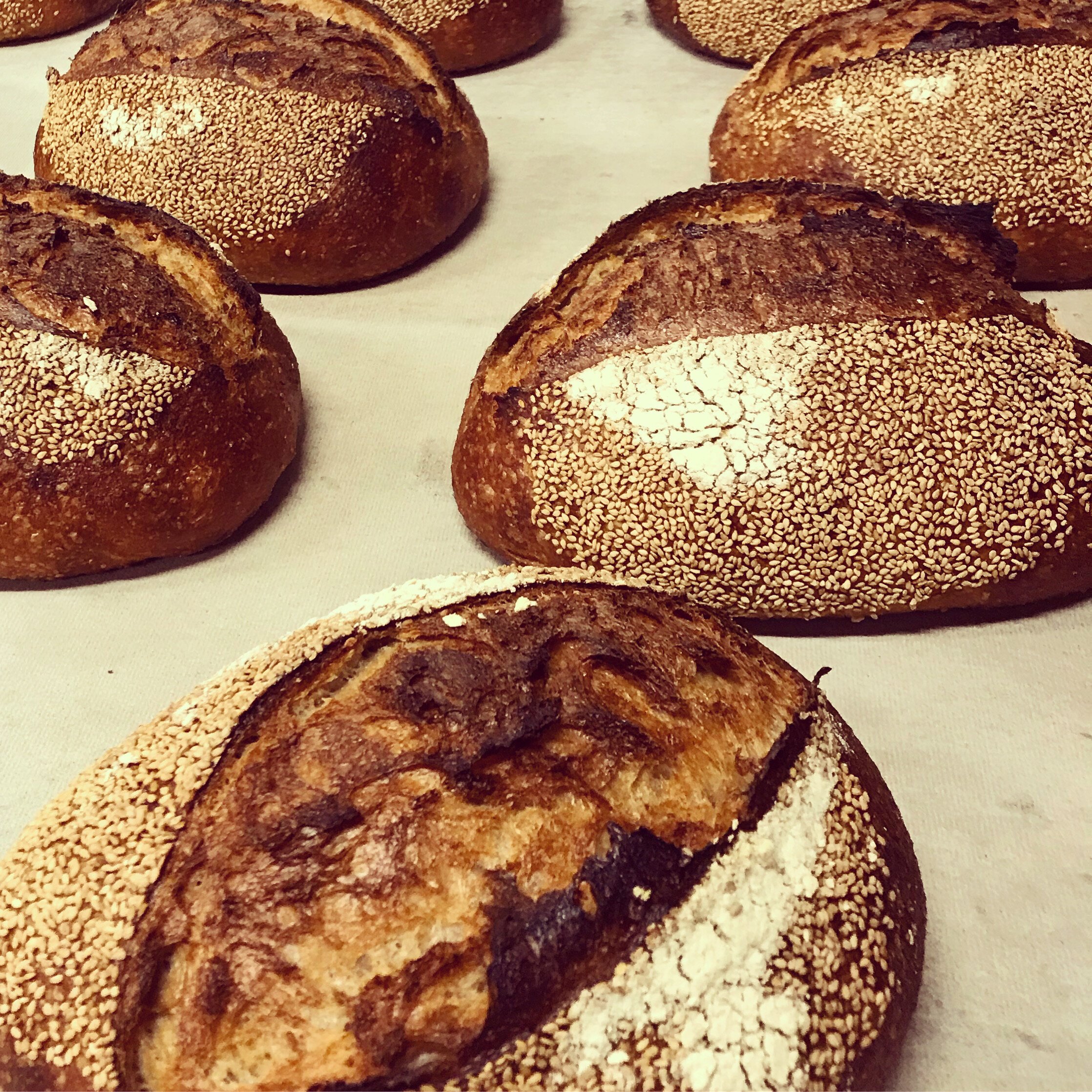
Our bread is naturally leavened and slowly fermented to unlock the full flavor and health benefits of sustainably-grown Northeast grain.
Our partners
We are so thankful to partner with farms and mills in Maine who invest daily in revitalizing our grain economy, from seed to loaf.
Why? By investing in our regional grain economy, we support innovation in sustainable agriculture, regional supply chain growth, and healthy communities.

Maine Grains is a stone grist mill in Skowhegan that sources only non-GMO and sustainably-grown grain. Maine Grains works directly with each of its farmers to create transparent, sustainable, and economically feasible trade relationships. Farmers supplying Maine Grains pledge never to use chemical fertilizers or pesticides on their grain crops. The Maine Grains milling facility is certified organic through the Maine Organic Farmers and Gardeners Association.
Rusted Rooster Farm is an organic family-run farm in Parkman, Maine. Sean and Sandra O’Donnell grow certified organic grains, corn, dry beans, peas, hay, straw and sunflowers for sunflower oil, as well as raising animals both big and small.
Aurora Mills & Farm is a second-generation family farm located in the breadbasket of the Northeast – Linneus, Maine in Aroostook County. As pioneers in the resurgence of the Maine grain economy, the Williams and Flewelling families have been growing and distributing organic grain throughout the Northeast since 1998. Together they continue to innovate within the Maine grain industry by specializing in regenerative organic growing practices and diversifying and identifying alternative crops for grain rotations.
Somali Bantu Community Association’s Liberation Farms provides new American farmers access to, and culturally-appropriate resources for, the means of sustainable food production for themselves, their families, and their communities. Liberation Farms is food justice in action, building food and economic security for over 200 families in the Lewiston area by providing access to land, seeds, trainings, technical assistance, and marketing. All of the farmers receive 1/10 of an acre to grow food for themselves and their families. Farming is an integral part of the Bantus’ cultural heritage and each farmer has adapted generations of agricultural knowledge to Maine’s unique climate and growing season. Family farmers grow high-quality, chemical-free vegetables, including specialty and rare varieties, and gorgeous African flint corn.
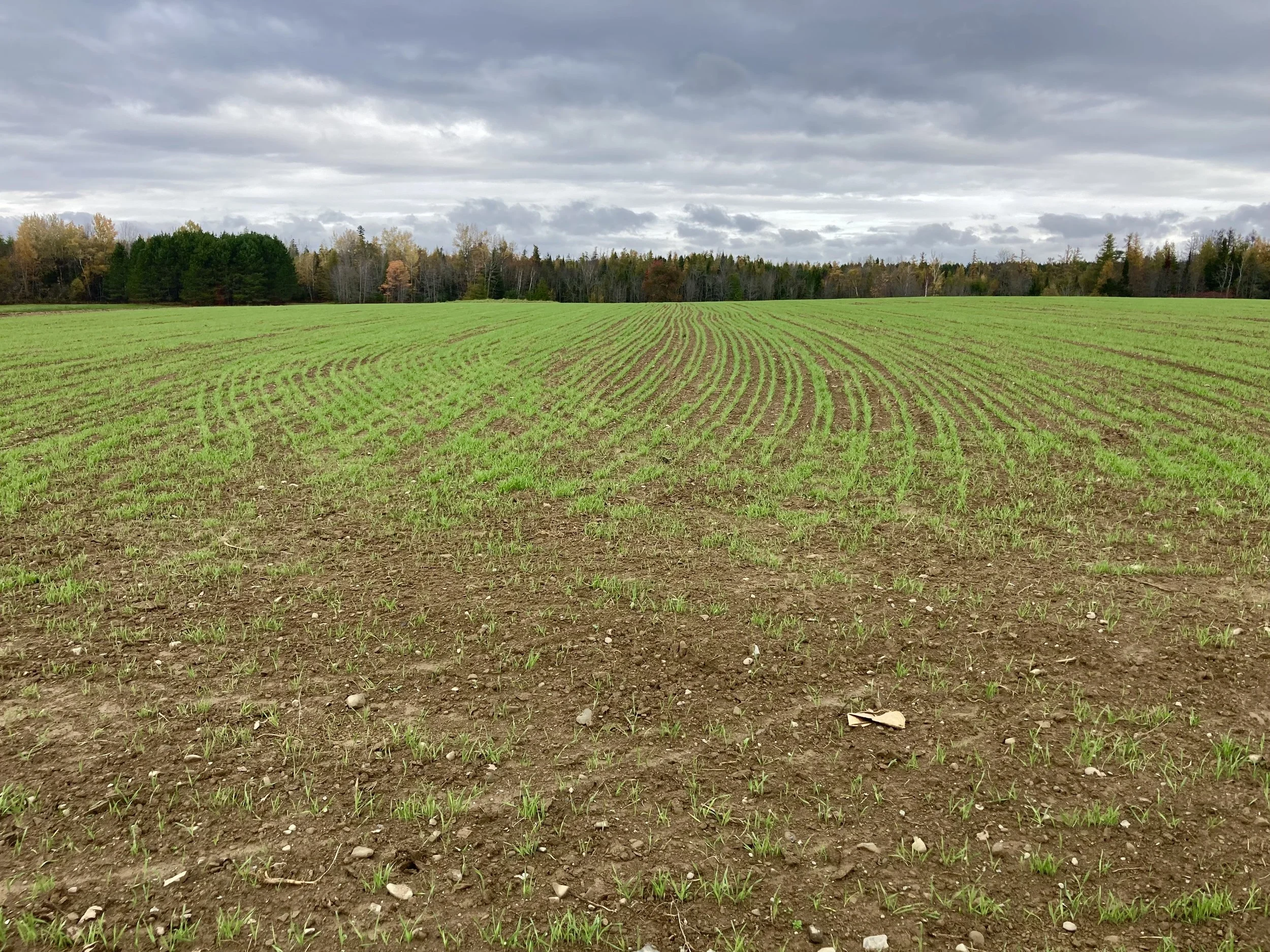
sustainably-grown
One of the most important ways we can mitigate the climate crisis is in agriculture. Organic farming practices have been found to have 26% more long-term carbon storage potential than conventional farms, mitigating the atmospheric effects of climate change. Recent studies have found toxic and carcinogenic pesticide residues on 12.7% of conventional wheat[1]. Not only does conventional wheat carry potentially these harmful substances and less nutritional value overall to consumers, these toxic residues remain in soil and poison water sources. Our farmer partners never use pesticides. Sustainable farming practices protect the health of communities and soil for generations to come.
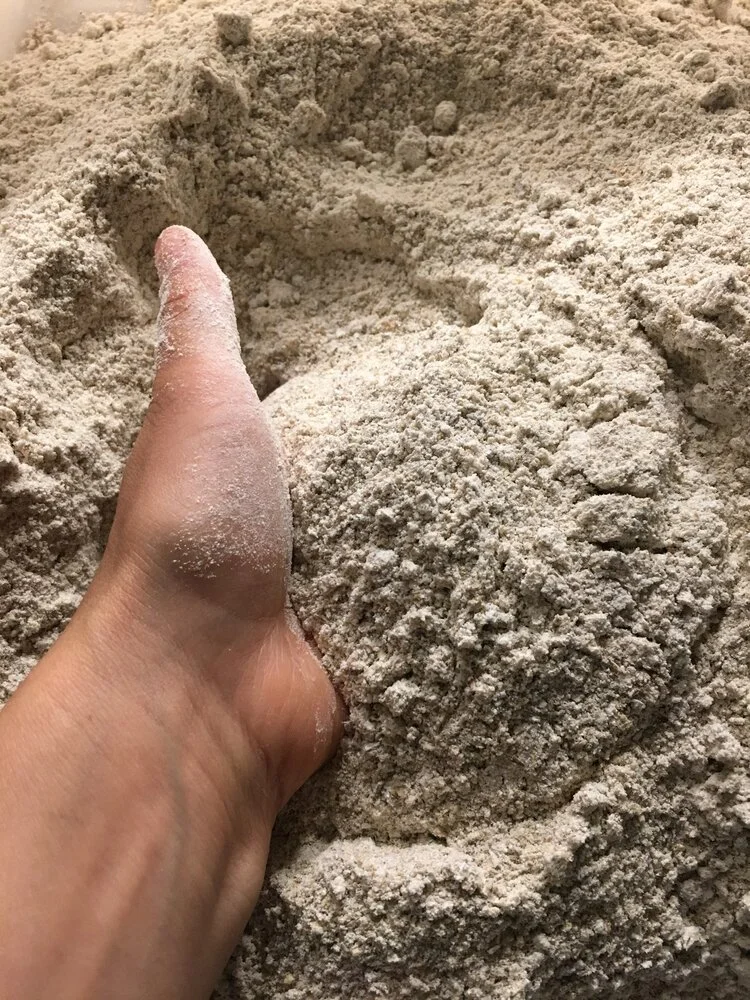
Stone-milled
Stone milling slowly grinds grain at a cool temperature, preserving the natural oils and mineral content of the grain and resulting in a more nutrient-dense and flavorful flour. Roller-milled flour (most flour in consumer products and sold in supermarkets in the United States) has been stripped of these nutrients in the milling process, resulting in a nutrient-dead product, devoid of the fiber necessary to properly digest. At the 2017 Whole Grain Summit in Vienna, researchers asserted that “replacing refined grains with whole grains globally could reduce the burden of chronic disease more than any other change.”[2] On top of the nutritional benefits, fresh-milled stone-ground flour maintains the delicious, complex flavors of regional grain varieties.
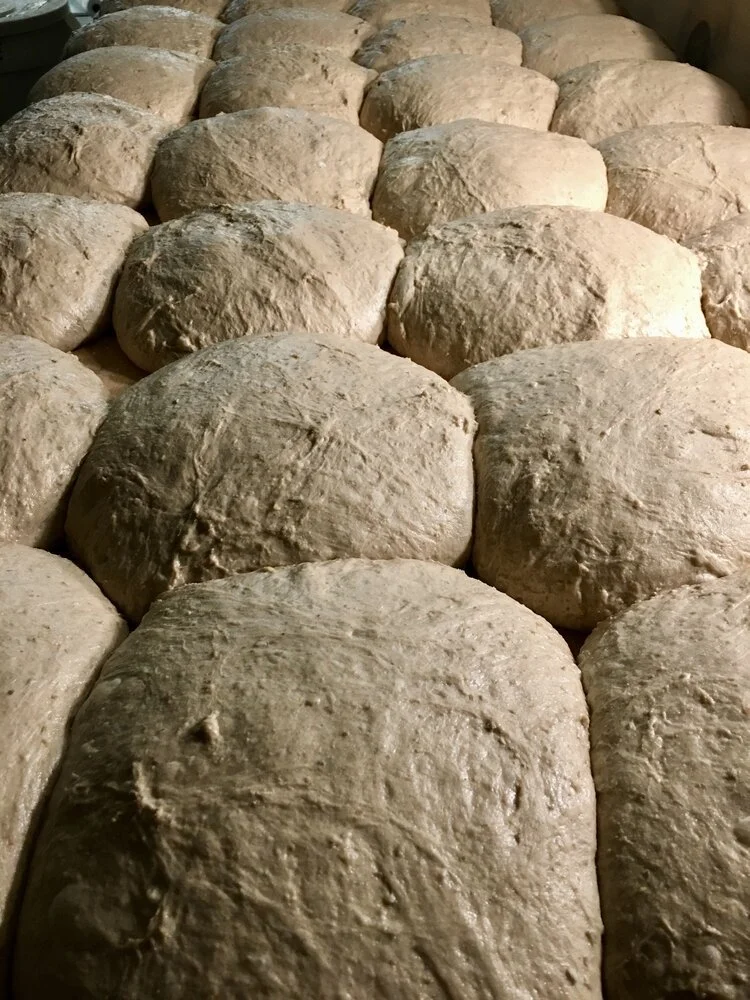
Slowly fermented
Natural leavening and slow fermentation break down starches and gluten into amino acids, making bread more nutritious and digestible, with an excellent keeping quality. According to the latest research from Cornell University[3] sourdough culture’s lactic acid bacteria (LAB) given 24 hours fermentation time, can break down grain proteins that are toxic to people with celiac and non-celiac gluten sensitivity. LAB produce antioxidants, the cancer-preventative peptide lunasin, and anti-allergenic substances which may help in the treatment of auto-immune diseases[4]. These by-products seem to be able to survive heating, suggesting that sourdough bread may have probiotic potential by stimulating immune responses in the gut.[5]
Bread, especially if made with unrefined flour, is a significant source of dietary minerals such as iron, calcium, magnesium and zinc. A slice of fast-made ‘whole wheat’ bread may be nutritious only in theory if its contents pass straight through the body without being absorbed - the main culprit here is phytic acid, present in the bran layers of cereals, which ‘locks up’ the important minerals. Several hours of fermentation with sourdough, however, is sufficient to neutralize phytic acid and make the minerals more bioavailable.[6] From Ethiopian injera to Eastern European sourdough rye breads to Chinese jiu niang, every culture around the world utilizes fermentation traditions to improve nutrition from raw food.
Punzi, JS, Lamont, M, Haynes, D, Epstein, RL, USDA Pesticide Data Program: Pesticide Residues on Fresh and Processed Fruit and Vegetables, Grains, Meats, Milk, and Drinking Water, Outlooks on Pesticide Management, June, 2005
https://www.ams.usda.gov/datasets/pdp
http://www.whatsonmyfood.org/food.jsp?food=WHhttps://wholegrainscouncil.org/blog/2017/12/behind-scenes-vienna%E2%80%99s-whole-grain-summit
Lisa Kissing Kucek, The Grounded Guide to Gluten, 2014 https://www.youtube.com/watch?v=E88V7F_aYDg
Nonaka, Y et al, Antiallergic effects of Lactobacillus pentosus strain S-PT84 mediated by modulation of Th1/Th2 immunobalance and induction of IL-10 production, Int Arch Allergy Immunol, 2008; 145(3): 249-57.
https://www.ncbi.nlm.nih.gov/pubmed/17914277Van Baarlen, P et al, Differential NF-kB pathways induction by Lactobacillus plantarum in the duodenum of healthy humans correlating with immune tolerance, Proc Natl Assoc Sci, 2009; 106: 2371–2376.
Leenhardt, F et al, Moderate decrease of pH by sourdough fermentation is sufficient to reduce phytate content of whole wheat flour through endogenous phytase activity, J Agric Food Chem, 2005; 53: 98-102.
Lopez, H W et al, Making bread with sourdough improves mineral bioavailability from reconstituted whole wheat flour in rats, Nutrition, 2003; 19(6): 524-530.